

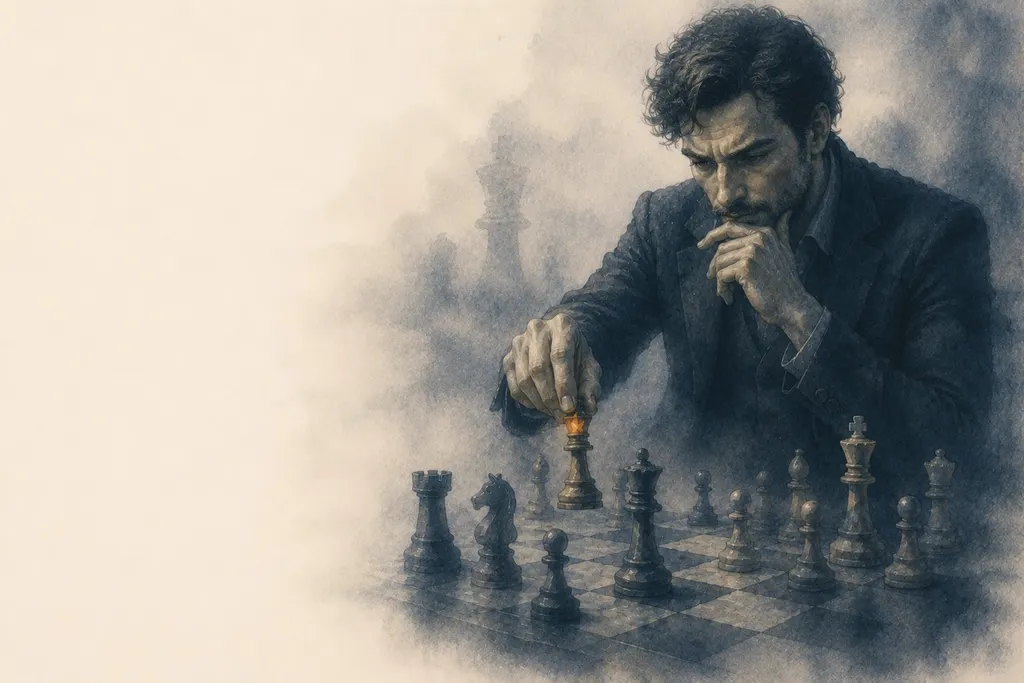
You see the position, not just the piece. Where most people react to the move in front of them, you tend to trace it forward — what it sets up, what it forecloses, who's exposed three turns from now. That blend of cool analysis and a willingness to commit means you don't just have opinions; you have plans, and the patience to hold them. People around you feel the difference between a hunch and a read. Yours is usually a read. The gift here isn't being right — it's seeing the consequences early enough that being right is still useful. The honest trade-off is that not every moment is a board to be solved, and reading three moves ahead can over-engineer a decision the room needed quickly.
You tend to think a few moves ahead, weigh the details others skip, and say what you've concluded rather than soften it.
How you show up
In a fast-moving room you're usually the one who pauses on the move everyone else is reacting to and asks what it actually sets up two or three steps from now. You think in positions, not pieces — and because you're analytical, detail-attentive, and willing to commit, you tend to arrive with a worked-through plan rather than a hunch, then say where you've landed plainly instead of softening it. People feel the difference: your read carries weight because it's clearly been reasoned, not felt.
Strengths
Your edge is foresight that's actually useful — you tend to see the consequences early enough that being right still changes the outcome, not just the post-mortem. The blend of cool analysis with the assertiveness to commit means you don't stall in options; you weigh the details others skip and then back a line. In situations where the cost of a wrong move compounds, you're the person who keeps a group from sleepwalking into it.