

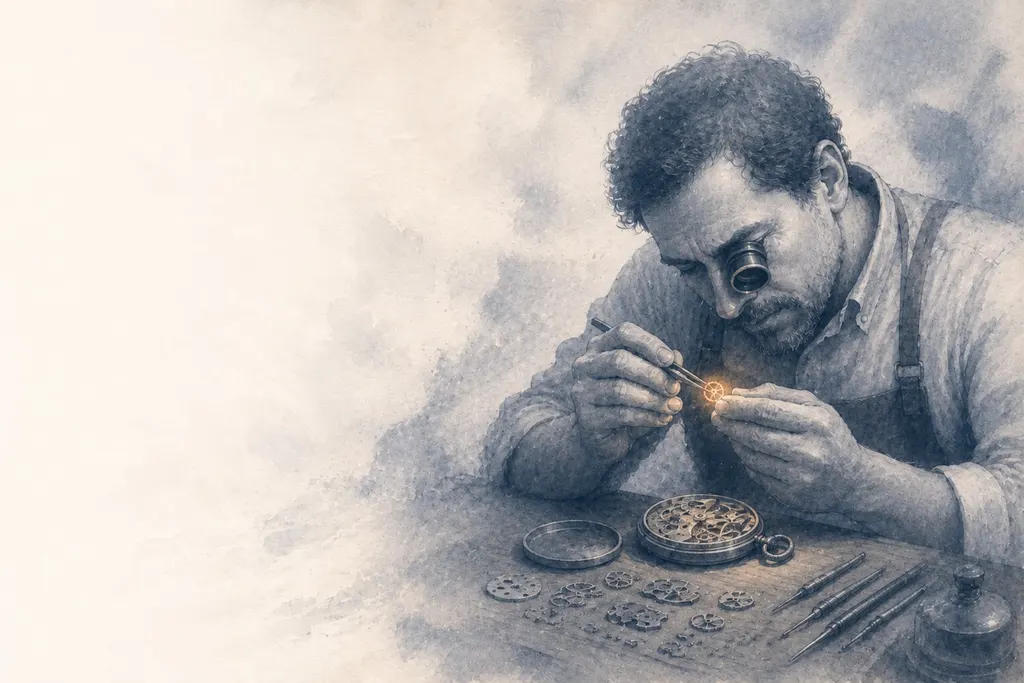
You work the way a watchmaker does: close attention to the parts most people skip, a system that holds it all together, and the patience to finish what you start. When something has to be right rather than merely done, you're the one it's safe to hand it to. The honest trade-off is that the same eye that catches the flaw can make "good enough" hard to accept, and depth sometimes costs speed.
You tend to catch the detail others miss and keep going until it's actually finished — not just until it's mostly there.
How you show up
In the day-to-day you're the one who notices the thing everyone else skimmed past — the off-by-one, the loose end, the step that was assumed but never checked. Your detail focus pairs with a structured way of working, so you don't just spot problems, you build systems that keep them from recurring, and your commitment means you stay with a task through the unglamorous final ten percent. When something has to be genuinely right rather than merely shipped, people learn it's safe in your hands.
Strengths
Detail, structure, and follow-through together produce reliability of a high order: work that holds up under scrutiny because the parts most people gloss over have actually been handled. You give a team a quality floor it can build on — fewer nasty surprises downstream, fewer "who was supposed to catch this" moments. There's a quiet craftsmanship here; you take real satisfaction in a thing done properly, and that standard tends to lift the work of everyone around you.